


What is the 15k Resistor: Uses, Types, and Use Guide
 26 Feb 2026 15:18:36 GMT
Tyson from www.hycxpcba.com
26 Feb 2026 15:18:36 GMT
Tyson from www.hycxpcba.com
In the realm of electronics, a seemingly small component like a 15k resistor plays a pivotal role in controlling the flow of electricity. Just as traffic lights manage the flow of vehicles in our cities, resistors regulate electrical current in circuits, and the 15k resistor, with its specific resistance value, is a common and critical component across many applications. This article dives deep into the world of the 15k resistor, explaining its types, uses, and how to select the correct one for your needs, ensuring that your electronic projects run smoothly and efficiently. We'll explore its applications in everything from simple circuits to complex electronic designs, providing a clear and accessible guide.
What is a 15k Resistor?
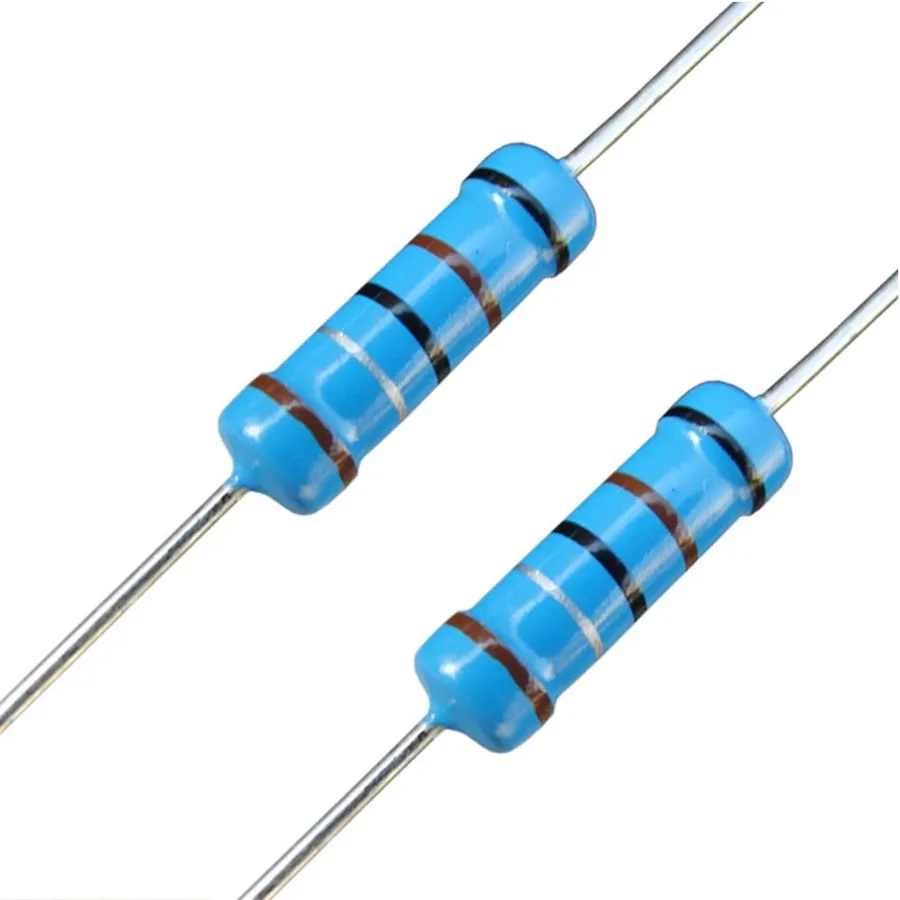
A 15k resistor is a fundamental passive electronic component designed to impede the flow of electrical current, characterized by a resistance of 15,000 ohms. Its primary function is to limit current, divide voltage, or provide a specific resistance in an electronic circuit, and it is a widely used value due to its versatility in a broad range of applications.
Resistors, including the 15k variant, are crucial elements in electronics that follow Ohm's Law, which states that the current through a conductor between two points is directly proportional to the voltage across the two points and inversely proportional to the resistance. The '15k' designation indicates that the resistor offers 15,000 ohms of opposition to electrical current flow. This specific value allows engineers to finely control circuits, providing necessary current and voltage levels for sensitive electronic components.
Types of 15k Resistors

15k resistors, while all providing 15,000 ohms of resistance, come in various types, each with unique characteristics that influence their suitability for different applications. The primary types include carbon film, metal film, and wire-wound resistors, each exhibiting distinct performance and cost trade-offs. Understanding these differences is crucial for optimal circuit design.
| Resistor Type | Construction | Advantages | Disadvantages | Typical Applications |
|---|---|---|---|---|
| Carbon Film | A thin film of carbon is deposited on a ceramic substrate. | Low cost, widely available, suitable for general-purpose use. | Higher temperature coefficient, higher noise, lower precision. | General electronics, hobbyist projects, where high precision is not critical. |
| Metal Film | A thin film of metal alloy is deposited on a ceramic substrate. | Higher precision, lower temperature coefficient, lower noise, good stability. | More expensive than carbon film resistors, not as robust as wire-wound. | Precision circuits, audio applications, instrumentation, where stability and low noise are required. |
| Wire-Wound | A length of resistive wire is wound around an insulating core. | High power handling, high precision, good stability. | Higher cost, larger size, higher inductance. | High power applications, power supplies, current sensing, where high power dissipation and precision are required. |
The choice of resistor type depends heavily on the specific requirements of the circuit. Metal film resistors are generally preferred for applications demanding high precision and low noise, while carbon film resistors are a cost-effective solution for less demanding applications. Wire-wound resistors are chosen for applications requiring high power handling. Each type offers different trade-offs between cost, performance, and size, all contributing to the suitability of the resistor for a particular application.
15k Resistor Color Code

The color code on a 15k resistor is a standardized system used to quickly identify its resistance value and tolerance. This system employs colored bands to represent numerical values, multipliers, and tolerance levels, making it universally understandable and allowing for identification even when the resistor's physical markings are absent or obscured.
| Band | Color | 4-Band Resistor Significance | 5-Band Resistor Significance |
|---|---|---|---|
| 1st Band | Brown | 1 | 1 |
| 2nd Band | Green | 5 | 5 |
| 3rd Band | Orange | Multiplier (1000) | 0 (Black) |
| 4th Band | Gold/Red | Tolerance (±5%) | Multiplier (100) |
| 5th Band | Brown | - | Tolerance (±1%) |
For a 4-band 15k resistor, the color sequence is: Brown (1), Green (5), Orange (1000 multiplier), and Gold (±5% tolerance). For a 5-band precision 15k resistor, the sequence is: Brown (1), Green (5), Black (0), Red (100 multiplier), and Brown (±1% tolerance).
Common Applications of 15k Resistors

The 15k resistor, a component valued for its moderate resistance, is a staple in diverse electronic circuits. Its applications range from basic current control to more complex signal conditioning, highlighting its versatility in circuit design.
-
LED Current Limiting
A primary use of the 15k resistor is to limit current flowing through Light Emitting Diodes (LEDs). By placing a 15k resistor in series with an LED, the current is reduced to a safe operating range for the LED, preventing damage and ensuring proper functionality. This is a fundamental application in any circuit incorporating LEDs. -
Voltage Division
15k resistors are frequently used in voltage divider circuits to create a specific voltage level. In conjunction with another resistor, a 15k resistor will reduce a higher voltage to a desired lower value. This is a critical technique in sensor interfaces and signal processing where voltage level adjustment is needed. -

-
Pull-up and Pull-down Resistors
In digital logic circuits, 15k resistors serve as pull-up or pull-down resistors. A pull-up resistor will hold a signal high (at supply voltage) when the driving input is floating, and a pull-down will hold the signal low (at ground potential) in similar scenarios. The 15k value is often used as this pull-up or pull-down to maintain stable digital levels and ensure predictable circuit behavior. -
Audio Circuits
15k resistors can also be found in audio amplification and signal processing circuits. For example, they are used in pre-amplifiers and tone control circuits for impedance matching, gain adjustment, and filtering. The precise resistance provides the necessary attenuation or gain without affecting other aspects of the signal. -
Sensor Interfaces
Many sensors output a signal as a change in resistance, 15k resistors are used to create a circuit that converts the sensor's resistance change into a measurable voltage. This can be used for a diverse range of sensor readings such as temperature, pressure, and light which depend on variations in voltage levels across the resistor.
Selecting the Right 15k Resistor for your Project

Choosing the appropriate 15k resistor for a specific application requires careful consideration of several key parameters beyond just the resistance value. These factors ensure the resistor functions reliably and safely within the intended circuit. Specifically, power rating, tolerance, temperature coefficient, and package type are critical for optimal performance and longevity of the circuit.
| Parameter | Description | Implications of Incorrect Selection |
|---|---|---|
| Power Rating | The maximum power a resistor can safely dissipate as heat, measured in watts (W). | Exceeding the power rating can lead to overheating, resistor failure, and potential damage to the circuit. |
| Tolerance | The acceptable deviation from the stated resistance value, expressed as a percentage (%). | Using a resistor with insufficient tolerance can cause inaccurate circuit operation and poor performance. |
| Temperature Coefficient | The change in resistance value per degree Celsius (°C), expressed in parts per million per degree Celsius (ppm/°C). | A high temperature coefficient can cause changes in resistance over temperature, leading to unstable or unreliable circuit operation, especially in environments with temperature fluctuations. |
| Package Type | The physical size and style of the resistor, which affects how it's mounted and the power it can handle. | Choosing the wrong package can result in issues with board layout, mounting, and heat dissipation. Different types, like SMD, and through hole, affect ease of use and suitability for a particular PCB, or project board. |
-
Practical Tips for Selection
Begin by calculating the power dissipation required by the resistor in the specific circuit using Ohm’s law and power equations (P = I²R or P = V²/R), then choose a resistor with a power rating at least 2 times higher than the calculated power dissipation to provide a safety margin. For general applications, a 5% or 1% tolerance resistor is adequate; for circuits that require high precision, consider resistors with 0.1% tolerance. In high or low temperature applications select a resistor with the appropriate temperature coefficient, choosing a resistor with a lower ppm/°C value for a more stable resistance over temperature. Ensure that the selected package type is appropriate for your mounting requirements, as well as having sufficient size to handle the power dissipation requirements.
15k Resistor vs. Other Resistor Values

The selection of a resistor value, such as a 15kΩ, is crucial in circuit design and is determined by the specific electrical requirements of the application. Comparing a 15kΩ resistor with other common values like 10kΩ and 20kΩ reveals key differences in their applications and performance characteristics, influencing their usage in electronic circuits.
| Resistor Value | Typical Applications | Current Limitation | Voltage Division | Pull-up/Pull-down Strength |
|---|---|---|---|---|
| 10kΩ | Microcontroller interfaces, general-purpose signal conditioning, and pull-up/pull-down resistors. | Higher current flow compared to 15kΩ or 20kΩ for the same applied voltage. | Lower voltage at the tap when used as a voltage divider compared to 15kΩ. | Stronger pull-up/pull-down strength than 15kΩ or 20kΩ, quicker logic state changes. |
| 15kΩ | LED current limiting, audio circuits, sensor interfaces, and general-purpose applications needing a moderate resistance. | Moderate current limitation compared to 10kΩ and 20kΩ for the same applied voltage. | Moderate voltage at the tap when used as a voltage divider. | Moderate pull-up/pull-down strength, suitable for general logic. |
| 20kΩ | Low power applications, high impedance interfaces, and where minimal current consumption is necessary. | Lower current flow compared to 10kΩ or 15kΩ for the same applied voltage. | Higher voltage at the tap when used as a voltage divider compared to 15kΩ | Weaker pull-up/pull-down strength than 10kΩ or 15kΩ, slower logic state changes |
The practical choice of a resistor value depends on the specific requirements of the circuit. Lower resistance values like 10kΩ allow more current to flow for a given voltage and are preferred when a stronger pull-up/pull-down or faster response times are needed. Higher values like 20kΩ are beneficial in low-power applications or when a weaker signal is required, while 15kΩ provides a balance between these two, making it a very versatile value for numerous electronic applications.
Frequently Asked Questions About 15k Resistors
This section addresses common queries regarding 15k resistors, providing clarity on their characteristics, applications, and proper usage. It is crucial to understand these aspects to ensure optimal performance and safety in electronic projects.
-
What does the 'k' in a 15k resistor mean?
The 'k' in a 15k resistor stands for kilo, which is a metric prefix denoting 1000. Therefore, a 15k resistor has a resistance of 15,000 ohms. -
What is the typical power rating of a standard 15k resistor?
A standard 15k resistor typically comes with a power rating of 1/4 watt (0.25W). However, higher power ratings like 1/2W, 1W, or even higher can be selected based on the application’s needs. Always consider the circuit's current to select the suitable power rating of the resistor. -
What are the common color codes for a 15k resistor?
For a four-band 15k resistor, the color code is typically: Brown (1), Green (5), Orange (3 zeros), Gold (5% tolerance). For a five-band resistor, it would be: Brown (1), Green (5), Black (0), Red (2 zeros), Brown (1% tolerance). -
What happens if I use a 15k resistor with the wrong tolerance?
Using a 15k resistor with the wrong tolerance can lead to unexpected circuit behavior. For example, a higher tolerance resistor (e.g., 10%) could cause the actual resistance value to be significantly higher or lower than the nominal 15k, potentially leading to inaccurate current flow or voltage division, thus affecting the overall performance of the circuit. -
Can a 15k resistor be used in LED circuits, and if so, how?
Yes, a 15k resistor can be used in LED circuits to limit the current flowing through the LED, protecting it from damage due to overcurrent. It’s crucial to calculate the required resistance using Ohm's law, taking into account the LED's forward voltage and desired current. In many cases, this may not be the ideal value as it is a higher resistance than typically used with LEDs, unless a very low current is required. -
How do I test a 15k resistor using a multimeter?
To test a 15k resistor with a multimeter, set the meter to the ohms (Ω) setting. Place the probes across the resistor leads. The measured value should be within the resistor's tolerance range of 15k ohms. A reading far outside this range indicates that the resistor is likely faulty. -
When should I choose a 15k resistor over other resistor values?
A 15k resistor is chosen when specific resistance value is required in a circuit, often in applications where an exact current or voltage drop is necessary. While a 10k or 20k resistor is common, the 15k provides unique operating characteristics for the circuit. This might be when working with transducers, sensors or timing applications.
Troubleshooting with 15k Resistors
Effective troubleshooting of circuits involving 15k resistors is essential for maintaining functionality and performance. This section details common issues, testing methods, and identification techniques for faulty 15k resistors, ensuring their proper implementation within electronic designs.
-
Common Issues with 15k Resistors
Common problems include open circuits, altered resistance values (either higher or lower), and physical damage due to overheating or mechanical stress. -
Testing with a Multimeter
A multimeter can verify resistance. Select the appropriate Ohms range, connect the probes to each end of the resistor, and compare the measured value against the expected 15k ohms. A significant deviation indicates a faulty resistor. -
Identifying a Faulty Resistor
Visual inspection can reveal physical damage, such as burns, cracks, or broken leads. If the multimeter reading deviates significantly from the rated 15k ohms, the resistor should be replaced. -
Steps to Ensure Correct Implementation
Always verify the resistor's value with a multimeter prior to soldering. Use proper soldering techniques to avoid overheating. Ensure the correct power rating of the resistor is used for the application, using a lower power rating can cause overheating and potential failure.
Future of 15k Resistors and Emerging Trends
The future of 15k resistors, like all electronic components, is intertwined with advancements in material science, manufacturing processes, and the evolving needs of technology. Expect to see shifts towards higher precision, increased miniaturization, and greater environmental sustainability.
-
Advanced Materials
Research is ongoing to develop new resistor materials with enhanced properties such as lower temperature coefficients, improved long-term stability, and reduced noise. Nanomaterials, for instance, may offer solutions for smaller, more precise resistors. -
Miniaturization and Surface Mount Technology (SMT)
The trend towards smaller electronic devices necessitates further miniaturization of resistors. Surface mount technology is becoming increasingly dominant, driving demand for smaller, more easily automated components such as 15k resistors in smaller packages (e.g., 0402, 0201 sizes). -
Precision and Tolerance
Applications requiring higher precision and lower tolerance resistors are also increasing. Advances in manufacturing will focus on reducing deviations in resistance values within each batch, thus improving performance and reliability of electronic devices. -
Environmental Concerns
The electronics industry is becoming more environmentally conscious, leading to a greater emphasis on lead-free and eco-friendly components. Future 15k resistors will increasingly adopt materials and manufacturing methods that reduce environmental impacts. -
Integration and Multifunctionality
In the future, we may see 15k resistors integrated into other electronic components or substrates, offering more compact designs. Additionally, research is ongoing into making resistors with multi-functionality such as combining with thermal sensors or other capabilities. -
Role in Emerging Technologies
15k resistors will remain a vital component in future technological advancements. They are fundamental in emerging fields such as IoT (Internet of Things), electric vehicles, and renewable energy systems, requiring continued performance and reliability improvements.
The 15k resistor, despite its simple appearance, is an essential component of modern electronics, akin to a vital cog in a complex machine. Understanding its types, applications, and characteristics is crucial for anyone working with electronic circuits. Whether you're a hobbyist or a professional engineer, mastering the basics of the 15k resistor and when to utilize one is an important step in your electronics journey. Just like a 15k resistor precisely controls the flow of electricity, the knowledge of this component empowers you to carefully design and optimize electronic systems, enabling reliable and predictable behavior in all sorts of applications and pave the way for new innovations.
-
06 Mar 2026 14:08:44 GMT
What is Heavy Copper PCB
-
04 Mar 2026 10:15:22 GMT
How Dose AOI Enhances Solder Paste Inspection For PCB