


What is Materials of Drone FPV PCB ?
 29 Jan 2026 17:43:10 GMT
Tyson From www.hycxpcba.com
29 Jan 2026 17:43:10 GMT
Tyson From www.hycxpcba.com
When designing a PCB for a FPV drone, the choice of materials and manufacturing processes determines
not only the electrical performanceof the circuit board, but also the weight, stability,
signal quality and reliability of the drone in harsh environments.
Common MaterialsDue to its low cost and high mechanical strength, FR4 is ideal for consumer-grade drones.
Polyimide (PI) materials are often used for drones that require flexible layouts or operate in high-temperature environments.
They are flexible and can withstand temperatures exceeding 250°C,
making them ideal for flexible printed circuit boards (PCBs) or rigid-flex boards.
Metal substrates (aluminium or copper-based) have excellent heat dissipation performance,
so these substrates are widely used in motor drives and LED lighting modules that require high-power heat dissipation.
| Material Type | Thermal Conductivity (W/m·K) | Glass Transition Temp Tg (°C) | Dielectric Constant Dk (1GHz) | Water Absorption (%) | Cost Level |
| FR4 | 0.3 – 0.4 | 130 – 170 | 4.2 – 4.8 | 0.1 – 0.2 | ★ |
| Polyimide (PI) | 0.3 – 0.4 | >250 | 3.5 – 3.8 | 0.1 – 0.2 | ★★★ |
| Aluminum Core | 1.0 – 2.0 | 130 – 170 | 4.0 – 4.5 | <0.1 | ★★ |
| Copper Core | 2.0 – 3.0 | 130 – 170 | 4.0 – 4.5 | <0.1 | ★★★ |
| Carbon Fiber Composite | 3.0 – 6.0 | 200 – 250 | 3.2 – 3.6 | <0.05 | ★★★★ |
How to Make a Drone PCB ?
If you want to try to make your own drone PCB, you can use PCB design software to get a layout and customize your board. Look at this video for reference:
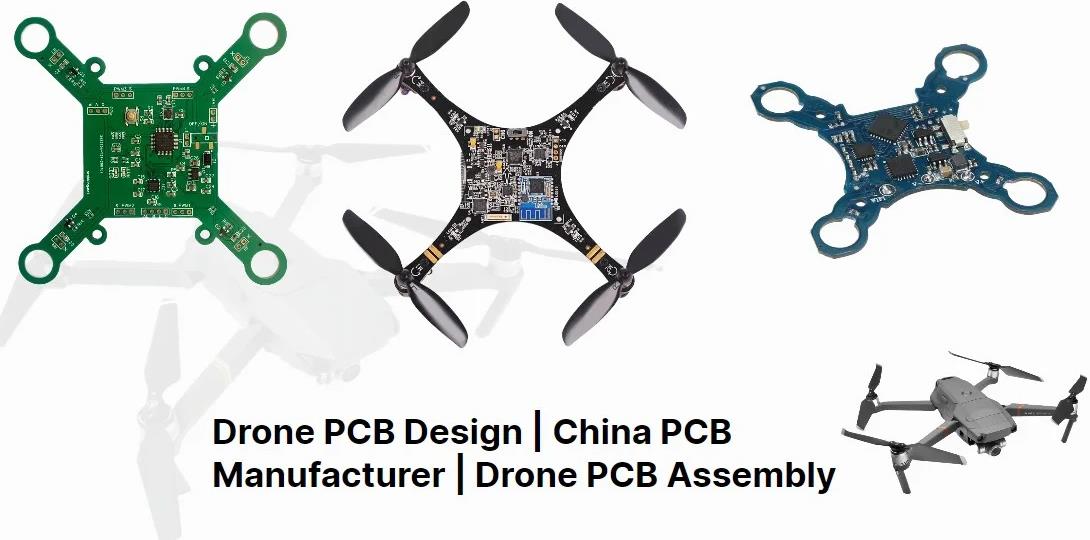
FPV Drone PCB is not only the “central nervous system” of unmanned aerial vehicles (UAVs), but also a critical component that ensures flight performance and safety. With the application of high-speed communication, artificial intelligence, and new materials technology, the design of drone PCBs will become increasingly intelligent, lightweight, and highly integrated.

-
06 Mar 2026 14:08:44 GMT
What is Heavy Copper PCB
-
04 Mar 2026 10:15:22 GMT
How Dose AOI Enhances Solder Paste Inspection For PCB